

Prolific artists like Leonardo da Vinci, Frida Khalo and Janice Lowry keep several detailed journals recording their painstaking creative process. Was that the key to their creative success?
Today, we will examine how you too can use writing as a tool to boost your creative success as a prophetic artist.
Here’s how:
Writing helps to streamline your creative workflow.
Writing is an excellent way to tangibly document and organize your thoughts. This is extremely helpful in the initial stages of project planning where you as the artist may be overwhelmed with creative ideas.
The aim is to succinctly write down your ideas and goals for the project and revise them until you achieve a workable project plan. You can even get fancy with it and visualize your ideas with mind maps, collages tables etc.
Having all your preliminary thoughts laid out on paper (or screen) helps you to sift the bad ideas from the good ones, and then, sift the best ideas from the good ones. This written record also serves useful for future reference in the event you forget some ideas.
Ultimately, writing down your ideas and goals for your work forces you to better focus on exactly what you’re aiming for.
Here are some questions to consider when using writing to plan your creative Projects:
- Who is my audience?
- In one sentence, what message do I want to communicate to the audience?
- What is the focus point (emphasis) of this piece?
- What design elements, principles and techniques can I incorporate in this piece to effectively communicate the intended message?

Writing allows you to track your creative progress.
Da Vinci’s notetaking style proved to be an especially great tool for more detailed records of his projects. His notes teach us the importance of documenting visual studies and research as you progress through different phases of a project and keeping track of completed steps.
Writing throughout the project can also be used as points of “mini reflections” that help to fine tune your process throughout the duration of the project.
Finally, writing reflections on your completed project helps you to critically think about the wins and losses of that piece.
Here some sample creative project reflection questions:
- How well did I communicate my intended message?
- What was the thing I enjoyed the most about this creative workflow?
- What was the thing I enjoyed the least about this creative workflow?
- What were some challenges I faced in creating this piece and how did I overcome them?
Pro tip: Also ask for feedback from persons who have viewed your work.
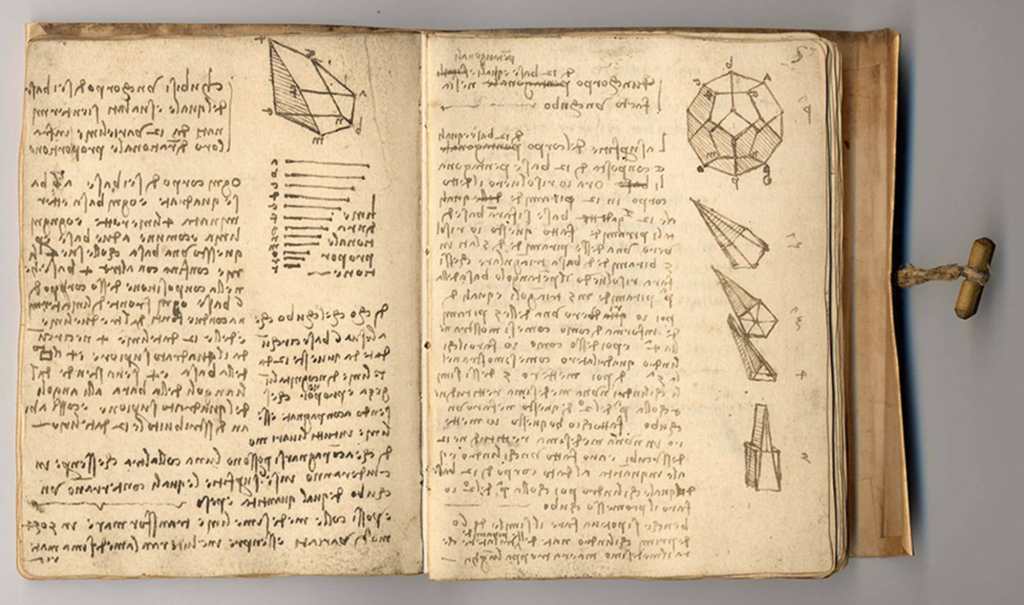
Writing allows you to track your creative journey long term.
Imagine if you documented your process in detail with every creative project that you did over the past year… That would mean that you would have amassed an extensive catalog of your artistic progress.
Every six months to a year, you can review and assess your writings to identify and implement ways to improve your general creative workflow. This will give you a tangible evidence of your creative growth over the years.
Here are some creative journey reflection questions:
- How have I grown creatively over the past 6 months to 1 year?
- What are some of the mindsets and habits that are hindering me from achieving my full creative potential?
- How can I work toward developing better creative habits and mindsets?
- What are some activities or hobbies I can engage in to better nurture my inner artist?
Pro Tip: Video journaling works too. You can also opt to post your reflections to YouTube UNLISTED to save storage.

Let us know your proudest accomplishment of your creative journey below in the comments.
 Profess Creatives
Leave a comment